
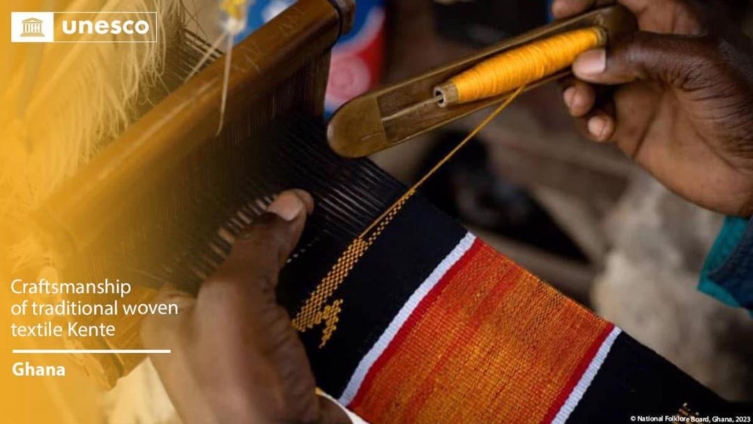
Ghana’s iconic Kente weaving tradition has officially been recognized by UNESCO, earning a spot on the Representative List of Intangible Cultural Heritage of Humanity under the 2003 Convention for the Safeguarding of Intangible Cultural Heritage.
In a statement signed by Andrew Egyapa Mercer, the Minister of Tourism, Arts, and Culture (MoTAC), the recognition highlights the immense cultural and historical value of Kente, a hand-woven textile cherished by the Asante and Ewe communities of Ghana. Known worldwide for its vibrant colours, intricate patterns, and deep symbolic significance, Kente is a powerful reflection of the creativity, heritage, and identity of the Ghanaian people.
“The inclusion of Kente in this esteemed list is a testament to our dedication to preserving Ghana’s rich cultural traditions and sharing them globally. It also reinforces Ghana’s leadership in cultural heritage conservation and promotion on the world stage,” the statement said.
Minister Andrew Egyapa Mercer expressed gratitude to President Nana Addo Dankwa Akufo-Addo, the Republic of Ghana, and UNESCO for this recognition.
MoTAC also applauded the collaborative efforts of various stakeholders, including traditional leaders, cultural institutions, artisans, and implementing agencies, for contributing to this achievement. Special acknowledgment was given to the communities of Bonwire, Agotime, and others, who continue to protect and nurture this cherished tradition.
“As we celebrate this significant milestone, MoTAC reaffirms its unwavering commitment to promoting and safeguarding Ghana’s cultural heritage,” the Minister concluded in the release.