
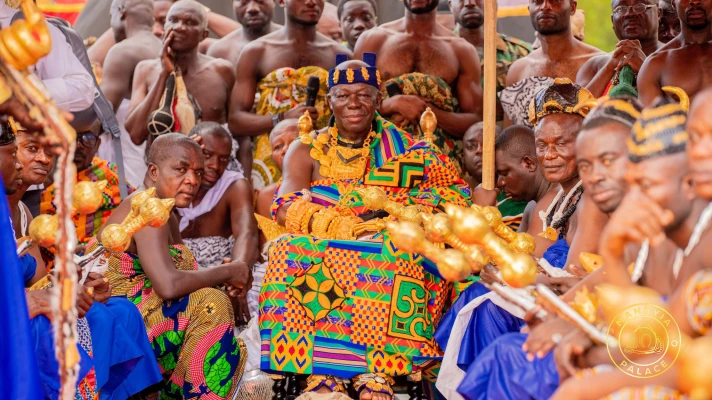
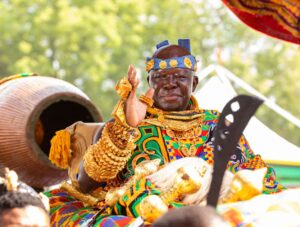
The Akwasidae Festival stands as a vibrant testament to the cultural richness of the Ashanti people, both in their homeland and abroad. This significant celebration is dedicated to honoring ancestors and fostering community bonds, reflecting the deep traditions and values inherent in Ashanti culture.
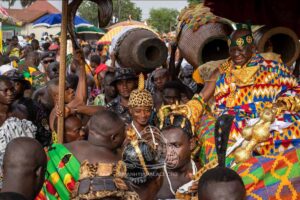
Observed every six weeks on a Sunday in accordance with the Akan annual calendar, the Akwasidae Festival is deeply rooted in the respect for ancestors. It forms part of the larger Adae Festival cycle, which spans approximately six weeks, encompassing 40 to 42 days. Within this timeframe, two pivotal observances are marked: the Akwasidae Festival on the final Sunday and the Awukudae Festival on a Wednesday during the cycle. A key day leading up to the Akwasidae is Fofie, a ritual Friday occurring ten days prior, dedicated to preparation and spiritual reflection.
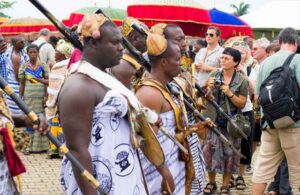
The final Akwasidae of the year coincides with the Adae Kese Festival, during which the community places a strong emphasis on food offerings and donations to assist those in need. These festivals are steeped in long-standing traditions, adhering to a schedule established since ancient times.

At the heart of the Akwasidae Festival is the honoring of both personal and community ancestors through a variety of rituals and ceremonies. One of the festival’s highlights is the Akom gathering, characterized by lively drumming, dancing, and singing in tribute to Abosom (lesser gods) and Nsamanfo (spiritually cultivated ancestors). Traditional dishes, such as eto (mashed African yam) garnished with hard-boiled eggs, are prepared as offerings, symbolizing gratitude and respect.
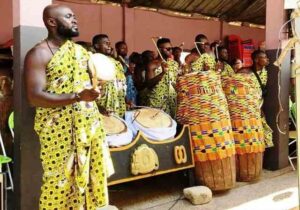
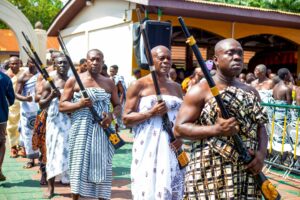
The festival culminates in a grand gathering at the Manhyia Palace courtyard, where the Asantehene (King of Ashante) convenes with his subjects and subordinate chiefs. The revered Golden Stool is prominently displayed, drawing large crowds eager to participate in the festivities through singing and dancing. During the durbar, the king provides an opportunity for the community to interact and pay their respects. His entrance is a spectacle, as he travels in a palanquin adorned with gold jewelry, accompanied by a vibrant parade featuring drummers, dancers, horn-blowers, and singers.

A significant aspect of the Akwasidae Festival is the king’s visit to the Bantama Mausoleum, where he offers worship to the ancestral stools and skeletal remains of his forebears. This act of homage underscores the deep respect and connection to the lineage of the Ashanti people.
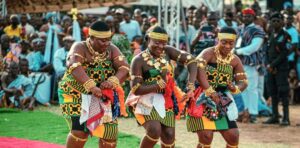
Ultimately, the Akwasidae Festival serves as a profound cultural expression, nurturing unity, spiritual connection, and the preservation of time-honored traditions within the Ashanti community.