The Krobo People and the Dipo Rites: A Colorful Celebration of Womanhood and Tradition

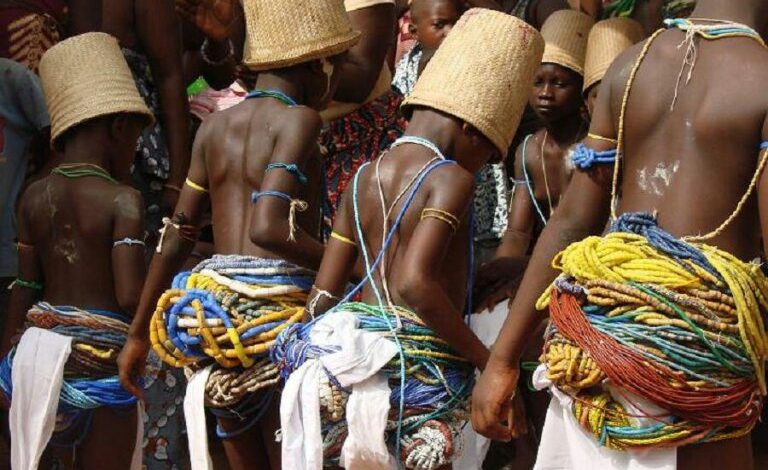
Each April, the Odumase Krobo people of Ghana’s Eastern Region come together to celebrate their deep-rooted cultural heritage, most notably through the vibrant “Dipo Rites”, a significant initiation ritual marking a young girl’s passage into womanhood.
The Dipo Rite Ceremony:
This time-honored tradition commences when girls reach puberty. The ritual, both lively and intricate, symbolizes the community’s dedication to preserving its cultural identity. It begins with the careful selection of participants, followed by a period of seclusion where the initiates are trained in essential life skills such as cooking, cleaning, childcare, and traditional Krobo dances and songs.
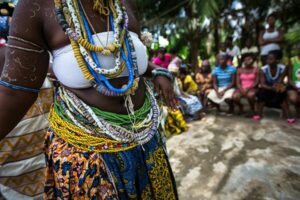
The first phase of the ceremony sees the girls’ heads shaved, symbolizing their transition from childhood. The initiates, called “dipo-yo”, are dressed in cloth tied around their waists and paraded through the community, signifying their readiness for womanhood. A ritual mother oversees this transformation, guiding them as they prepare for adulthood.
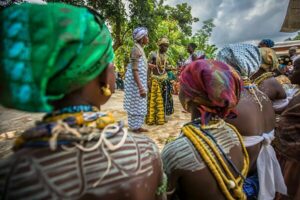
At dawn the next day, the chief priest leads the initiates through a sacred bath ritual. He pours libation and washes their feet with goat’s blood, a symbolic act believed to guard them against barrenness. The most pivotal moment arrives when the girls sit on a sacred stone, a traditional test of virginity. Girls who do not pass this test are rejected by the community and lose their desirability within the tribe.
The ceremony is filled with various colorful activities:
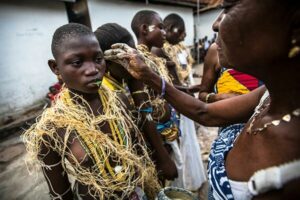
– Body painting: Natural pigments are used to create intricate patterns on the girls’ bodies.
– Dancing: The initiates perform traditional dances, showcasing their elegance and beauty.
– Gift-giving: Friends and family shower the girls with gifts, symbolizing their new status as women.
– Feasting: The community gathers for a grand feast, celebrating the girls’ transition with traditional food and drink.
The Significance of the Dipo Rite:
The “Dipo Rite” holds immense cultural value for the Krobo people and serves several key functions:
– Rite of passage: It marks a significant milestone, transforming girls into women.
– Cultural preservation: It ensures the continuation of Krobo customs, values, and knowledge passed down through generations.
– Community unity: The ceremony fosters solidarity and a sense of belonging among community members.
– Empowerment: The rite prepares young women for their societal roles, reinforcing their importance in Krobo society.
Relevance in the Modern Era:
Despite the rapidly changing world, the Dipo Rite remains a cornerstone of Krobo culture. It continues to play a critical role in preserving the Krobo way of life, empowering young women, and maintaining a strong sense of identity within the community.
In conclusion, the “Dipo Rites” of the Krobo people stand as a vivid and enduring celebration of womanhood, culture, and tradition. As the world modernizes, this ancient practice continues to resonate, ensuring that the Krobo people’s values and customs are passed down to future generations. The ceremony is a reminder of the power of tradition in shaping identities and fostering a deep connection to one’s heritage.