
“Postcards: The Emails of Their Time – How Cat Memes Went Viral 100 Years Ago”

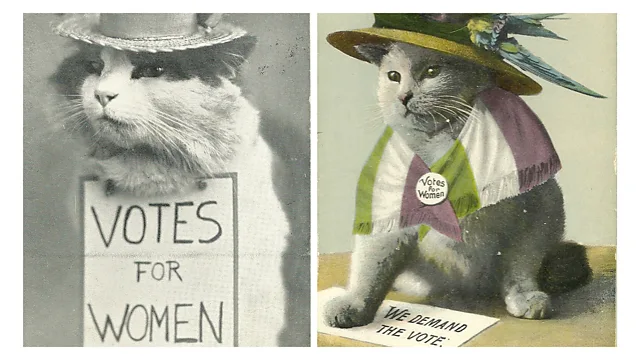
In today’s world, social media has revolutionized how we communicate, but this isn’t the first time cats have taken center stage in a cultural shift. A fundamental law of media history holds true: as soon as a new communication technology emerges, people will inevitably use it to share pictures of cats. These feline images highlight both the special bond between humans and their pets and the evolving ways people connect with each other.
While modern cat memes date back to the 1990s, with office workers emailing funny feline photos, this trend has roots far earlier. Cat videos, like the iconic “Keyboard Cat,” and memes, such as Grumpy Cat, skyrocketed in popularity across social media platforms. Websites like ICanHasCheezburger further capitalized on the demand for funny cat content, aggregating viral pet videos and memes. But long before smartphones or social media, cat-themed postcards were the equivalent of viral content in the early 20th century.
The Edwardian postcard, according to media historians, offers insights into today’s social media culture. Ben Weiss, a senior curator at the Boston Museum of Fine Arts, notes that postcards back then functioned similarly to social media today. In the late 19th and early 20th centuries, postcards were a cheaper, faster, and more convenient way to send messages, jokes, and, of course, cat pictures. “Some things persist across generations and media, and depictions of cats are one of those things,” says Weiss. Whether stamped and mailed in 1924 or posted with a tap in 2024, cats have remained a beloved subject for artists and audiences alike.
The postcard was first introduced in Austria-Hungary in 1869, and soon after, in 1874, 21 countries formed the Universal Postal Union, making international mail possible. Postcards rode this wave, becoming a tangible marker of technological progress, similar to how memes today symbolize the power of the internet.
By the early 20th century, sending postcards had become a craze, particularly in urban areas. This was a revolutionary moment for communication, marking the first time that people could send messages quickly and affordably over long distances. As postcards surged in popularity, millions were circulated, and cats quickly took over this new medium. Postcards featuring cats ranged from playful depictions of everyday feline behavior to images of cats dressed as humans in domestic scenes.
Yet, not everyone embraced the postcard’s popularity. Critics feared that postcards, being a quick and public form of communication, would degrade people’s writing skills. There were also concerns that postcards would lead to more superficial relationships, replacing lengthy letters with short, image-driven messages. Monica Cure, author of *Picturing the Postcard: A New Media Crisis at the Turn of the Century*, notes that early critics likened postcards to a “Frankenstein’s monster,” worrying they would lead to a decline in deeper, more meaningful communication. These anxieties about postcards parallel concerns today over the rapid nature of social media and its impact on how we relate to each other.
Like modern memes, postcard culture also intersected with political movements. One prominent example is the Suffrage movement, where postcards featuring cats played a role in spreading messages. Suffragettes cleverly utilized the medium to fundraise and engage with the public. Cats, often seen as symbols of domesticity, were used to challenge traditional gender roles while appealing to popular culture.
Heidi Herr, a curator at Johns Hopkins University, points out that cats were a perfect symbol for the Suffrage movement—both passive and predatory. Suffragettes embraced this symbolism to build their brand and communicate their message effectively. Ann Lewis, a former communications director for the Clinton White House and a collector of Suffrage memorabilia, praises the movement’s use of postcards, calling them “the emails of their day—personal and inexpensive.”
The connection between cats and media culture remains strong today, with cat-themed stickers and memorabilia still in high demand. Whether through postcards or memes, one thing is clear: humans have long been fascinated by sending and sharing cute and funny animal pictures.
Source : BBC


