
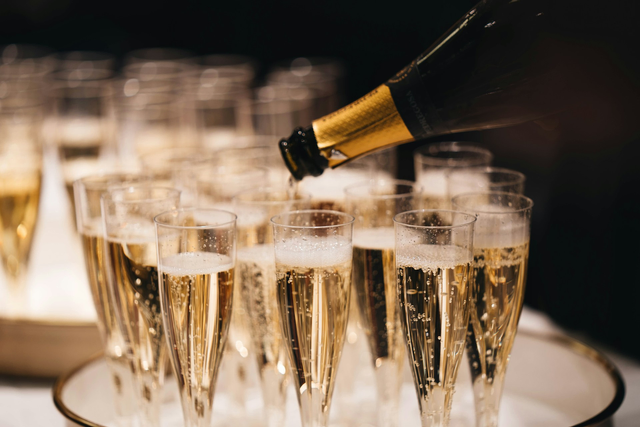
Champagne, the quintessential symbol of luxury and celebration, has captivated hearts with its exquisite taste and timeless charm. More than just a drink, it’s an emblem of life’s joyous milestones—weddings, graduations, New Year’s festivities, and business triumphs. But there’s more to this sparkling wine than meets the eye. Here are 10 fascinating facts every champagne enthusiast should know.
1. Rooted in France
True champagne hails exclusively from the Champagne region in northeastern France. Strict appellation laws govern its production, ensuring authenticity. From the grape varieties to the winemaking methods, every detail is carefully regulated, making Champagne a truly unique creation.
2. The Magic of Bubbles
Champagne owes its fizz to a process called secondary fermentation, which occurs in the bottle. This méthode Champenoise involves adding a mix of yeast, wine, and sugar—liqueur de tirage—to the base wine. As fermentation progresses, carbon dioxide forms, creating the iconic bubbles. The leftover yeast, or lees, imparts complexity before being removed.
3. The Magnificent Seven
Seven grape varieties are permitted in Champagne production: five whites (Chardonnay, Petite Arbanne, Petit Meslier, Pinot Blanc, Fromenteau) and two reds (Pinot Noir, Pinot Meunier). However, most Champagnes feature a blend of Pinot Noir, Chardonnay, and Pinot Meunier. A wine made exclusively from white grapes is called blanc de blancs, while blanc de noirs uses only red grapes.
4. Vintage vs. Non-Vintage
Non-vintage (NV) Champagnes dominate the market, blending wines from multiple years to create a consistent “house style.” Vintage Champagnes, by contrast, use grapes from a single harvest, showcasing the unique character of that year. They’re produced only in exceptional years, chosen by the chef de cave (cellar master).
5. A Taste of Bread
Champagne’s signature aroma often includes hints of bread or pastry, thanks to its contact with lees during aging. Non-vintage bottles must spend at least 12 months aging on the lees, while vintage Champagnes require three years. In reality, most Champagnes age longer, enhancing their complexity and texture.
6. Sweetness Spectrum
Sugar plays a crucial role in Champagne production, influencing its sweetness. It’s added three times: during primary fermentation, secondary fermentation, and as a final dosage. This last addition determines the wine’s sweetness level, ranging from bone-dry brut nature (less than 3 g/L of residual sugar) to the decadently sweet doux (over 50 g/L).
7. Under Pressure
Each bottle of Champagne is pressurized to five to six atmospheres—double that of a car tire. To safely open a bottle, twist the base (not the cork) while keeping a thumb on top to control the release. For a more dramatic approach, try sabrage—opening the bottle with a saber—but proceed cautiously!
8. Preserve the Bubbles
To keep Champagne fresh after opening, use a high-quality Champagne stopper. When properly sealed and refrigerated, an opened bottle can retain its effervescence for up to five days.
9. A Culinary Companion
Champagne isn’t just for toasts—it’s a surprisingly versatile pairing for food. Its high acidity complements rich dishes, while its crisp finish cleanses the palate. From canapés to fried chicken and even pizza, Champagne adds a touch of elegance to any meal.
10. The Right Glass Matters
Though the traditional flute preserves bubbles, many experts prefer white wine glasses for Champagne, as their wider bowl enhances aromas. Tulip-shaped glasses strike a balance, offering the best of both worlds.
Master these insights, and you’ll deepen your appreciation for Champagne, making every sip a celebration of tradition, craftsmanship, and taste. Cheers!