
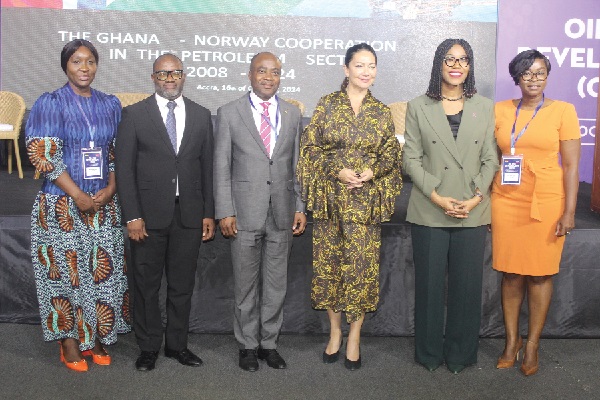
Norway has pledged to support Ghana in enhancing its renewable energy capacity, with a strong emphasis on leveraging the private sector as the primary catalyst for growth.
This renewed commitment comes on the heels of the conclusion of Norway’s assistance in developing Ghana’s upstream oil and gas sector, which began after the discovery of oil in commercial quantities in 2007.
“While we are phasing out the Oil for Development Programme, access to energy remains a key focus on our political agenda, shifting towards renewable energy,” said Norwegian Ambassador to Ghana, Ingrid Mollestad, during a recent event in Accra that celebrated the collaboration under the Oil for Development Programme.
Overview of the Oil for Development Programme
Initiated in 2005, Norway’s Oil for Development Programme has played a significant role in assisting developing countries like Ghana to manage their petroleum resources sustainably. The initiative emphasized a holistic approach that included resource extraction, revenue management, environmental safeguards, and safety measures, all aimed at alleviating poverty.
Ghana’s foray into the petroleum industry began in 2007 with the discovery of the Jubilee Field. Recognizing the need for specialized expertise, Ghana entered into a Memorandum of Understanding with Norway in 2008, establishing the framework for the Oil for Development Programme, which allowed Norway to share its extensive experience in resource management.
The programme has been a vital aspect of cooperation between the two nations since its inception, even prior to the establishment of Norway’s embassy in Ghana.
Future of Cooperation
Ambassador Mollestad emphasized that, despite the conclusion of the Oil for Development Programme, there are still ample opportunities for collaboration between Norway and Ghana in the management of natural resources. She pointed out that both countries, as coastal states, must prioritize the sustainable management of ocean resources to secure future prosperity.
Looking ahead, Mollestad acknowledged the challenges posed by climate change while recognizing that oil and gas will continue to play a significant role in many countries, including Ghana, for the foreseeable future.
Achievements of the Partnership
James Yamoah, Director of the Petroleum Directorate at the Ministry of Energy, highlighted key achievements of the Oil for Development Programme, including Ghana’s establishment of a robust legal and regulatory framework for the petroleum sector. This includes updated laws and policies that clearly delineate the roles and responsibilities of key institutions.
A major success of the partnership was the creation of the Petroleum Commission, which has effectively separated regulatory functions from the commercial activities of the Ghana National Petroleum Corporation (GNPC), leading to enhanced transparency and efficiency.
“Norway has also played a crucial role in strengthening Ghana’s Environmental Protection Agency (EPA) to oversee the environmental aspects of oil and gas operations. Moreover, the collaboration has enabled Ghana to develop a fiscal framework that ensures the government receives a fair share of petroleum revenue while providing a conducive investment environment for international partners,” Yamoah noted.
Strategic Collaboration Moving Forward
Cephas Adjei Mensah, Director of Research, Statistics, and Information Management at the Ministry of Environment, Science, Technology, and Innovation, remarked on the strategic advantages of leveraging Norway’s expertise. He noted that the successful collaboration has positioned Ghana to explore additional avenues for future cooperation and that the institutional networks established will provide a strong foundation for ongoing technical capacity building.
“Ghana is committed to maintaining the high standards established through this partnership and ensuring that our petroleum resources are managed sustainably for the benefit of all Ghanaians,” Mensah affirmed.
Source: graphic.com.gh


