
‘I Lost Nine Teeth Filming Squid Game’: Behind the Scenes with the Director

Hwang Dong-hyuk, the mastermind behind the global sensation Squid Game, laughs as he corrects me about his reported stress-induced dental woes during the first season. “It wasn’t six teeth,” he says. “It was eight or nine.”
Now deep into filming the second season of the dystopian Netflix series, Hwang reflects on the pressures of creating a show that captivated audiences worldwide. Set against a backdrop of life-or-death childhood games, Squid Game tells the story of desperate, debt-ridden contestants competing for a massive cash prize.
Yet, a second season almost didn’t happen. At one point, Hwang vowed he would never return to the series. When asked what changed his mind, his response is blunt: “Money.”
“Even though the first season was a massive global success, I didn’t earn much,” he admits. “This new season will compensate for the first one and also allow me to finish the story.”
A Global Phenomenon
The first season of Squid Game shattered records as Netflix’s most-watched series, thrusting South Korean dramas into the global spotlight. Its dark exploration of wealth inequality struck a chord with audiences around the world. However, the series’ staggering popularity left Hwang with the challenge of starting from scratch—new characters, new games, and even higher audience expectations.
“The stress now is much greater,” Hwang confesses.
Three years after Squid Game’s debut, the director feels even more disheartened about the state of the world. He points to ongoing wars, climate change, and a widening wealth gap as evidence of deepening global divisions.
“New conflicts are emerging—not just between rich and poor but across generations, genders, and political ideologies,” he explains. “We’re in an era of ‘us versus them,’ where everyone is fighting to prove who’s right.”
A Darker Second Chapter
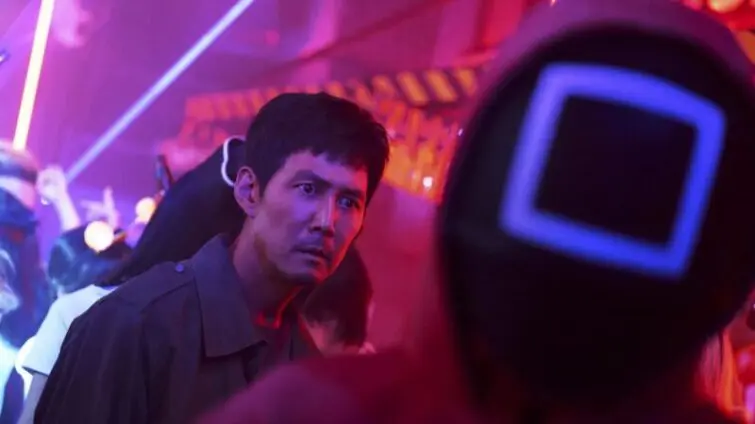
This season follows Gi-hun, the previous winner, as he re-enters the deadly games to dismantle the system and save new contestants. Lee Jung-jae, who plays Gi-hun, describes his character as “more desperate and determined than ever.”
New twists amplify the tension. Contestants must now pick sides after every game: quit and survive, or continue knowing most will die. This stark choice, symbolized by giant red and blue symbols in the dormitory, is designed to fuel factionalism and highlight the dangers of tribalism.
Hwang believes this setup reflects a world increasingly divided by rigid loyalties. “Forcing people to choose sides is intensifying global conflicts,” he says.
For all its commentary, Squid Game remains infamous for its brutal violence. But Hwang insists the bloodshed serves a purpose. “When making this series, I kept asking myself: Do we humans have what it takes to steer the world off this downhill path? Honestly, I don’t know.”
Revealing New Layers
The second season promises answers to lingering questions from the first. Fans will learn more about the enigmatic Front Man, whose backstory and motivations will be explored.
“Viewers will better understand his choices, though they may not sympathize with him,” says actor Lee Byung-hun, who relished filming unmasked scenes this time.
Hwang’s journey to bring Squid Game to life was no less intense. After struggling for a decade to secure funding, he eventually signed with Netflix, which paid him a modest upfront fee. Despite the series generating an estimated £650 million for the platform, Hwang saw little of that windfall.
South Korea’s Streaming Dilemma
Hwang’s experience highlights a broader issue faced by South Korean creators. While Netflix’s investment has elevated Korean content on the global stage, creators say the platform often demands full copyright ownership, leaving them without a share of the profits.
“The current model discourages creators from giving their all,” says writer Park Hae-young, whose Netflix series My Liberation Notes became a global hit. “Why spend years on a project when success won’t secure your future?”
Efforts to reform South Korea’s copyright laws are gaining momentum, with creators pushing for a fairer compensation system. The South Korean government acknowledges the issue but insists the industry must find its own solutions. Netflix, meanwhile, maintains that it offers competitive compensation regardless of a show’s performance.
Hwang hopes his openness about his own financial struggles will spark meaningful change.
A Legacy of Change
As filming for the second season wraps, Hwang jokes that his teeth are aching again. “I haven’t seen my dentist yet, but I’ll probably lose a few more soon.”
The second season of Squid Game premieres on Netflix on December 26, 2024, and it promises to deliver not just gripping drama but also a powerful critique of our increasingly divided world.
Source: BBC


