
IEA Questions Bank of Ghana’s Gold Coin Initiative as Long-Term Solution for Economic Issues
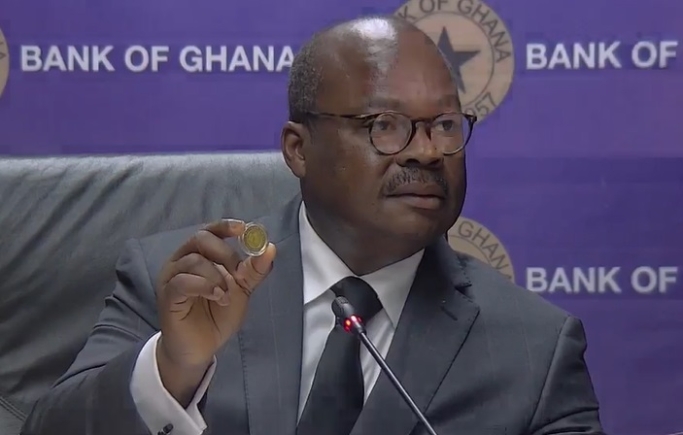
The Institute of Economic Affairs (IEA) has expressed concerns over the Bank of Ghana’s recently launched Ghana Gold Coin (GGC) initiative, questioning its ability to address Ghana’s deeper economic challenges.
Launched on September 27 as part of the central bank’s domestic gold program, the GGC was introduced with the aim of encouraging savings, improving liquidity, and strengthening the cedi against foreign currencies, particularly the U.S. dollar. However, in its latest bi-monthly report, the IEA suggests that the gold coin initiative may be more of a temporary fix than a sustainable solution to Ghana’s reliance on foreign currency.
According to the IEA, the GGC initiative fails to address the underlying economic factors that drive Ghanaian demand for foreign currency. “Offering the GGC as an alternative asset to the dollar appears to signal an acknowledgment of deeper economic issues that push Ghanaians to hold dollars instead of cedis,” the IEA commented, highlighting the need for a stronger response to these fundamental challenges.
The think tank also criticized the Bank of Ghana’s claim that the GGC would contribute to liquidity management. The IEA pointed out that the central bank’s process of buying gold with cedis, minting it into gold coins, and selling these coins back to the public with cedis results in no net reduction in liquidity. “The net effect of the GGC sale is zero liquidity withdrawal from the economy, contrary to the BoG’s assertion,” the IEA stated.
Instead of focusing on alternative assets, the IEA urged the Bank of Ghana to prioritize structural reforms that could address the cedi’s depreciation and Ghana’s growing demand for the dollar. According to the IEA, such reforms would offer a more lasting solution to economic instability.
The think tank recommends that measures such as fiscal and monetary discipline, reducing inflation to match trading partners, and closing the foreign exchange demand-supply gap through structural reforms would be more effective in stabilizing the economy.
The IEA’s assessment raises questions about the long-term effectiveness of the GGC in reducing Ghana’s reliance on foreign currency, casting doubt on whether the current approach will deliver the desired economic resilience.


