
‘The Substance’: Demi Moore’s Powerful New Film Explores Aging, Beauty, and Society’s Obsession with Youth

(CNN) At first glance, “The Substance” may seem like just another body horror film, filled with gore and disturbing visuals. However, a closer look reveals a deeply self-aware, feminist narrative that challenges society’s obsession with youth. Directed by French filmmaker Coralie Fargeat, known for her critically acclaimed debut “Revenge” (2017), the film serves as a graphic yet poignant exploration of the dangers women face in the pursuit of eternal beauty.
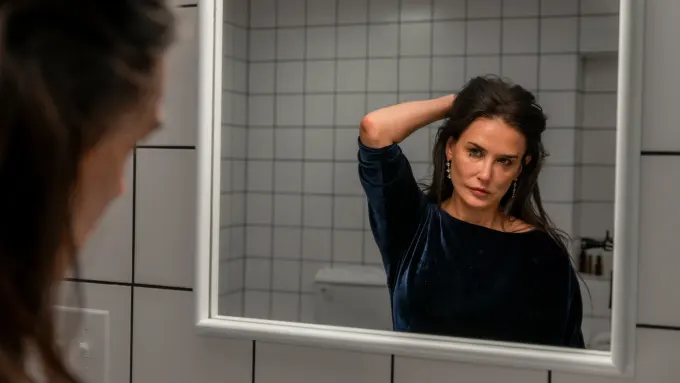
The plot centers on Elisabeth Sparkle, a successful actress and fitness icon played by Demi Moore, who gives a captivating performance. As the film begins, Elisabeth is celebrating her 50th birthday when she receives crushing news—she is being fired by her crass boss, Harvey (Dennis Quaid). Desperate to maintain her fame and youth, she learns about a mysterious drug, aptly named “The Substance,” which offers her a chance to regain her former vitality, albeit with dire consequences.

Margaret Qualley portrays Sue, a younger, more vibrant version of Elisabeth, emerging as a byproduct of The Substance. The film’s tension heightens as the two versions of Elisabeth must adhere to strict rules imposed by the shadowy corporation behind the drug. But it’s only a matter of time before this delicate balance collapses, leading to a chaotic and bloody conclusion.
What sets “The Substance” apart is not just its horror elements but its thematic depth. Fargeat, in an interview with CNN’s Christiane Amanpour, shared how her own fears about aging influenced the film. As she entered her 40s, she found herself overwhelmed by thoughts of losing relevance and worth, which she wanted to convey through the film’s raw and violent portrayal of women’s internalized struggles.
Moore, who has spoken openly about the pressures she’s faced in Hollywood, also found personal resonance in the film’s themes. In a recent interview on The New York Times’ “The Interview” podcast, Moore recounted painful experiences of being told to lose weight for roles, but acknowledged that the real harm came from how she treated herself obsessively exercising and restricting food to meet an unattainable standard of beauty.
As the film progresses, the conflict between Elisabeth and Sue mirrors the internal dialogue many women face daily, driven by societal pressures that constantly whisper: “You’re not good enough, you’re not beautiful enough.” Fargeat wanted to highlight this relentless, often destructive, conversation that takes place within.
“The Substance” also doesn’t shy away from nudity, but Moore emphasizes that the scenes are essential to the story. She explained that there was careful consideration around the vulnerability required, and these moments ultimately add to the rawness of the film’s narrative.
The drug’s sleek packaging and quick-fix promise draw parallels to modern beauty trends, like the buzz surrounding Ozempic, while also recalling films like the 1992 cult hit “Death Becomes Her,” which similarly satirized the lengths people go to for youth. References to “All About Eve” and “The Picture of Dorian Gray” are evident, and the grotesque visuals evoke John Carpenter’s horror classic “The Thing.”

Margaret Qualley and Dennis Quaid offer strong supporting performances, and Qualley’s casting is especially poignant, given her mother Andie MacDowell’s own comments on aging in Hollywood.
Premiering at the Cannes Film Festival, where it competed for the prestigious Palme d’Or and won Best Screenplay, “The Substance” has since been well-received, recently taking home the Midnight Madness People’s Choice Award at the Toronto International Film Festival.
Now playing in theaters, “The Substance” is more than a horror film it’s a bold, unsettling reflection on the societal pressures women face to maintain an image of perfection.
Source: CNN


